

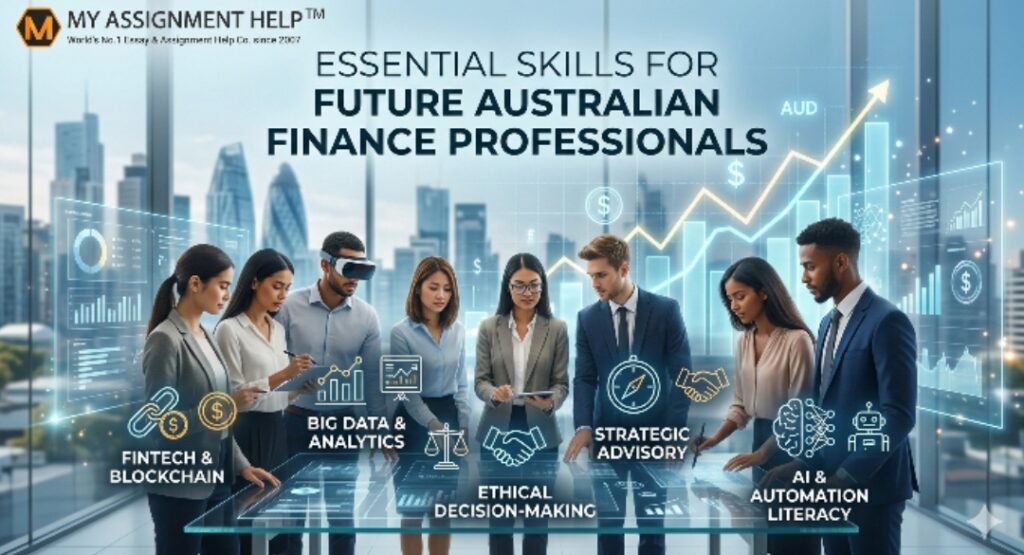
The Australian financial services sector is undergoing a seismic shift. As the ASX adapts to global volatility and the “Big Four” banks integrate sophisticated AI-driven models, the definition of a finance professional is being rewritten. For students and early-career practitioners in Sydney, Melbourne, and beyond, technical proficiency in balance sheets is no longer the finish line—it is merely the entry point.
To thrive in the next decade, the Australian workforce must navigate a landscape defined by ESG (Environmental, Social, and Governance) mandates, blockchain integration, and a tightening regulatory environment overseen by ASIC and APRA.
The Convergence of Tech and Capital
Historically, finance was a siloed industry. Today, it is a branch of data science. The modern Australian market demands “Financial Technologists”—individuals who can bridge the gap between traditional fiscal stewardship and modern algorithmic execution. As the industry moves toward real-time reporting, many students find that university curriculums struggle to keep pace with rapid digital shifts. Consequently, aspiring professionals often lean on myassignmenthelp to bridge the knowledge gap.
Gaining a competitive edge requires more than just passing exams; it demands a deep dive into advanced valuation and risk modeling. Accessing specialized Corporate Finance Assignment Help has become a strategic move for those looking to master these complex frameworks before entering a high-stakes boardroom environment. This academic rigor is essential, as the margin for error in modern portfolio management has narrowed significantly.
1. Data Analytics and Predictive Modelling
In the Australian context, data is the new gold. With the Consumer Data Right (CDR) expanding across the financial sector, professionals must move beyond simple spreadsheets.
- Python and R: Utilizing these languages to handle “Big Data” sets that Excel simply cannot process.
- Data Visualization: Using tools like Tableau or Power BI to present complex fiscal narratives to stakeholders.
- Predictive Analytics: Forecasting market trends using historical Australian Bureau of Statistics (ABS) data.
2. ESG and Sustainable Finance
Australia is uniquely positioned at the forefront of the green energy transition. Future finance leaders must understand that “profit” is now viewed through the lens of sustainability. This includes:
- Carbon Accounting: Measuring the financial risk of carbon footprints for ASX-listed companies.
- Green Bonds: Understanding the rise of sustainable investment vehicles.
- TCFD Alignment: Reporting in line with the Task Force on Climate-related Financial Disclosures.
3. Regulatory Compliance (RegTech)
The Hayne Royal Commission fundamentally changed the ethical requirements of Australian finance. Professionals now require a “compliance-first” mindset. Understanding Anti-Money Laundering (AML) and Counter-Terrorism Financing (CTF) laws is no longer optional.
In such a demanding environment, time management becomes the ultimate skill. When the pressure of mastering these regulations becomes overwhelming, many students choose to do my homework through professional services to free up time for practical internships and networking—simulating the professional trend of outsourcing administrative tasks to focus on high-level strategy.
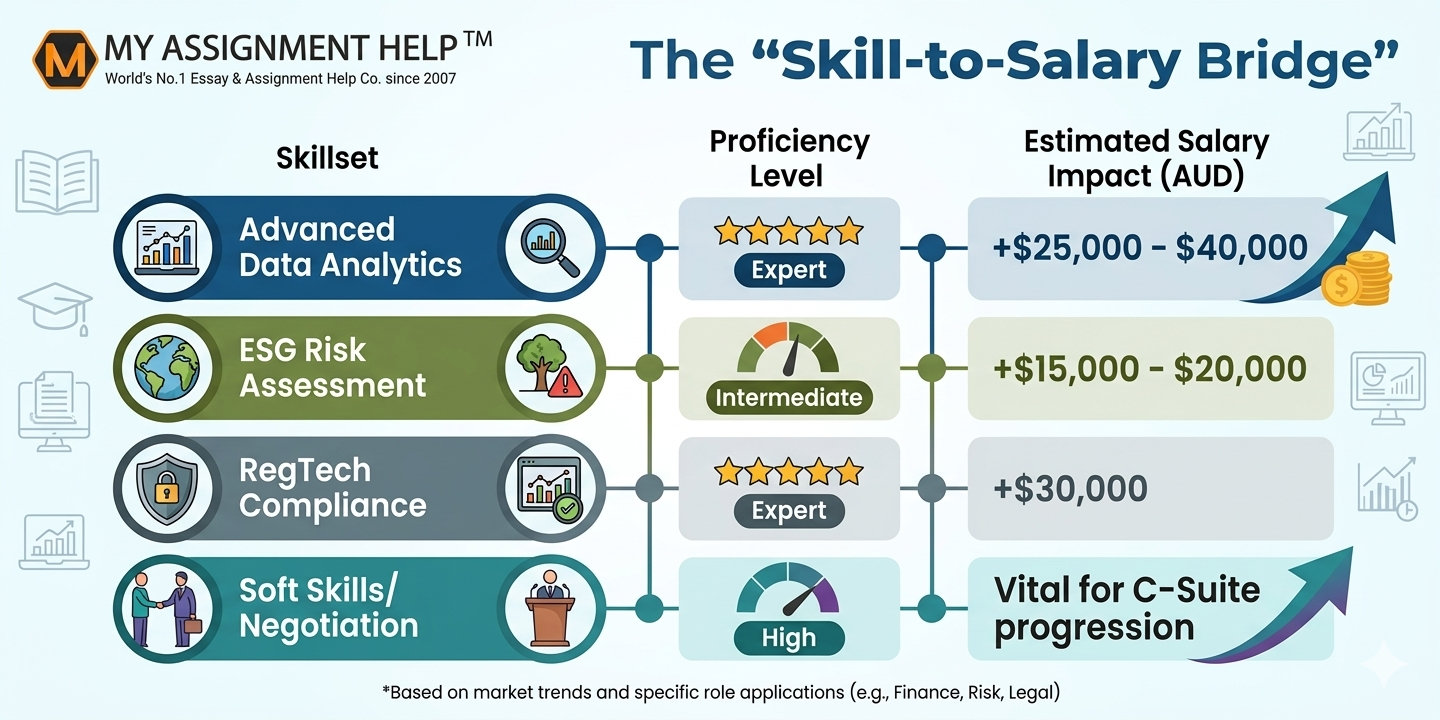
4. Emotional Intelligence (EQ) and Client Advisory
While AI can calculate a P/E ratio in seconds, it cannot reassure a nervous client during an RBA interest rate hike. The future of Australian finance is “human-centric.”
- Relationship Management: Building trust in a digital-first world.
- Strategic Communication: Translating complex jargon into actionable advice for everyday Australians.
5. Strategic Financial Management
The role of the CFO is transitioning from “scorekeeper” to “strategic partner.” This involves stress-testing business models against inflation and global supply chain disruptions. Leaders must be able to pivot capital structures quickly to remain resilient.
Key Takeaways
- Hybridization: Future-proof your career by combining finance theory with data science.
- Ethics First: Following the Royal Commission, integrity is the most valued currency in the Australian market.
- Continuous Upskilling: The half-life of a technical skill is now roughly five years.
- Local Expertise: Remain an expert in Australian-specific regulations (ASIC/APRA) while watching global macro-trends.
Frequently Asked Questions (FAQ)
Q: Which coding language is best for Australian finance?
A: Python is currently the industry standard due to its versatility in data analysis and machine learning.
Q: Do I need a CPA or CA to succeed in Australia?
A: While highly regarded, many modern roles in Fintech and Investment Banking now value specialized certifications in Data Science or ESG alongside traditional designations.
Q: How is AI affecting entry-level finance jobs?
A: AI is automating data entry and basic auditing. However, it is creating new roles in AI oversight and ethical algorithm management.
Author Bio
Lachlan McKenzie
Senior Financial Analyst & Academic Consultant
Lachlan has over 12 years of experience in the Australian banking sector, specializing in corporate restructuring and digital transformation. Currently a lead strategist at myassignmenthelp, he bridges the gap between academic theory and industry practice, helping the next generation of Australian students navigate the complexities of modern finance.
Data Sources and References
- Australian Bureau of Statistics (2024): Financial Services Employment Trends.
- Deloitte Australia: The Future of the CFO: 2025 Outlook.
- ASIC Annual Report: Regulatory Compliance and the Rise of RegTech.
- Reserve Bank of Australia (RBA): Monetary Policy and its impact on Corporate Valuation.
