

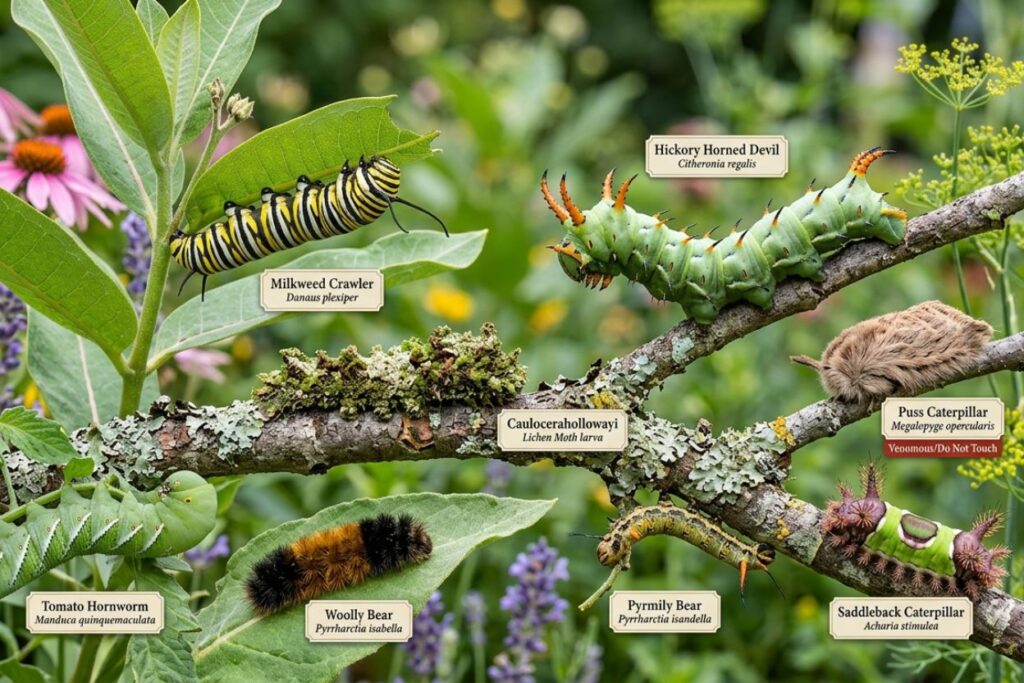
Naming a larva is no longer just about identifying a garden pest; it has become a way to connect with a rapidly changing natural world. In 2026, the fascination with Caterpillar Names has reached new heights, driven by breakthrough discoveries and a surge in nature-based hobbies. Whether you are a scientist looking for the Latin roots of a new species or a pet owner seeking a cute nickname, this guide covers every detail. From the traditional names we know and love to the macabre discoveries of the last year, here is everything you need to know about naming these crawling wonders.
New and Trending Discoveries for 2026
The biggest news in the world of entomology this year is the rare and eerie “Bone Collector” caterpillar. Recently discovered in the mountain ranges of Hawaii, this carnivorous species has captured global attention. Unlike traditional larvae that eat leaves, this creature hunts and decorates its silk case with the exoskeletons of its prey. Because of its unique behavior, it has quickly become one of the most famous Caterpillar Names in modern science.
In addition to predatory species, 2026 has seen a rise in the use of AI-driven identification apps. These tools have revealed that many “common” caterpillars actually belong to distinct sub-species that were previously overlooked. This technology allows every backyard explorer to contribute to a global database of nomenclature. Therefore, the list of recognized names is expanding faster than ever before, making it an exciting time for amateur entomologists.
The Logic Behind Scientific Caterpillar Names
While many people use casual titles, the formal naming system is deeply rooted in history. Scientists use Latin and Greek roots to describe the physical characteristics or behaviors of the insect. For instance, the “Geometrid” family is named after the Greek word for “earth-measurer.” This refers to their unique looping movement, which appears to be a measure of the ground as they crawl.
Understanding these formal Caterpillar Names provides a window into the creature’s life. The Nymphalis antiopa, commonly known as the Mourning Cloak, is named for its dark, velvet-like appearance that resembles a traditional cloak. By learning these scientific terms, you gain a deeper appreciation for the logic used by early biologists to categorize the natural world.
The Evolution of Common Names
Common names often reflect a region’s cultural history. In many cases, a single species might have five or six different names depending on where you live. For example, what one person calls a “Woolly Bear,” another might call a “Hedgehog Caterpillar.” However, in 2026, there is a global push to standardize these common names to make conservation efforts more effective across international borders.
Creative Ideas for Pet Caterpillar Names
If you are raising a larva at home, you probably want a name that is more personal than a scientific label. Many people choose names based on the “vibe” of the creature. For example, if your caterpillar is a fast eater, names like “Munch,” “Gully,” or “Crunch” are excellent choices. If it spends most of its time wiggling, you might prefer “Jiggles” or “Tingles.”
In addition to behavior, color is a great source of inspiration. For a bright yellow species, “Saffron” or “Goldie” are popular. For a green larva, names like “Pickle,” “Jade,” or “Fern” fit perfectly. Because these animals eventually undergo a total transformation, some owners choose “future-themed” names. For instance, “Skywalker” is a clever choice for a creature that will eventually take to the sky as a butterfly.
Humorous and Pun-Based Names
Humor is a big part of the 2026 pet-naming trend. Many enthusiasts enjoy puns that play on the word “caterpillar” or their crawling nature. Popular options include:
- Cater-Peter: A classic play on a common human name.
- Sir Squirms-a-Lot: Perfect for an active, wiggly pet.
- Alice Cooper: A fun nod to the famous rock star.
- Bugsy Malone: For a larva with a “tough” personality.
Identifying Dangerous and Stinging Species
Safety is the most important reason to learn specific Caterpillar Names. Not all larvae are safe to handle, and some can cause severe allergic reactions. The Puss Caterpillar is a prime example. Its name suggests something soft and cuddly, but it is actually one of the most venomous caterpillars in North America. Its fur hides sharp, hollow spines that inject a powerful toxin into the skin.
Furthermore, the Saddleback Caterpillar is named for the distinctive green patch on its back that looks like a saddle. However, this “saddle” is surrounded by stinging hairs that can cause intense pain. By learning these names and the appearances associated with them, you can protect yourself and your family while enjoying time in nature. Always follow the rule: if you don’t know the name, don’t touch the bug.
The Role of Warning Colors
Nature uses bright colors as a warning system, often called aposematism. Many of the most colorful Caterpillar Names, such as the Monarch or the Cinnabar, belong to species that are toxic to predators. These larvae ingest chemicals from their host plants that make them taste bitter or act as a poison. Therefore, a bright name often indicates a bright and dangerous defense mechanism.
Geographic Influence on Caterpillar Names
Where you live determines the types of larvae you will encounter and what they are called locally. In the tropical regions of Hawaii, you might encounter the “Bone Collector,” as mentioned earlier. However, if you are in the temperate forests of the United Kingdom, you are more likely to see the “Elephant Hawk-moth” larva. This name comes from the way the caterpillar can retract its head to look like an elephant’s trunk.
In 2026, climate patterns have shifted many species into new territories. This migration has led to “naming collisions” where two different species are given the same name in a new area. Consequently, local nature groups are working hard to update their field guides with the latest 2026 data to ensure everyone is using the correct terminology.
How to Research and Identify Your Own Find
If you find a caterpillar and want to know its name, start by looking at its host plant. Most larvae are extremely picky eaters and will only stay on one or two types of plants. For example, if you find a large green larva on a tomato plant, it is almost certainly a Tomato Hornworm. If you find one on a parsley leaf, it is likely a Black Swallowtail.
Next, note any unique markings. Does it have “eye spots” on its head? Does it have a horn on its tail? These physical markers are the keys to unlocking the correct Caterpillar Names. Using a digital identification app can provide a quick answer, but cross-referencing with a reputable 2026 field guide ensures the highest level of accuracy.
The Importance of Citizen Science
Today, regular people play a major role in scientific discovery. By photographing and naming the caterpillars in your local area, you help scientists track how species are responding to environmental changes. This “citizen science” movement has led to the discovery of several new species in the last two years. Your backyard observation could be the next big breakthrough in entomology.
Caterpillar Names in Literature and Culture
These creatures have long held a place in our stories and myths. Perhaps the most famous is “The Very Hungry Caterpillar” by Eric Carle. This character has introduced millions of children to the concept of metamorphosis and naming. In 2026, we see a resurgence of nature-themed literature that uses Caterpillar Names to teach themes of growth, patience, and change.
In various cultures, the appearance of a certain larva is seen as an omen. The Woolly Bear, as discussed earlier, is a staple of American folklore. In other parts of the world, a bright green larva might be seen as a sign of a successful harvest. These cultural titles add a layer of human meaning to the biological reality of the insect’s life.
Conclusion: Embracing the World of Larval Nomenclature
As we move through 2026, the study and naming of caterpillars continue to evolve. Whether you are using the scientific name Danaus plexippus or simply calling your pet “Wiggles,” you are engaging with a fascinating part of our planet’s biodiversity. From the predatory “Bone Collector” to the humble “Inchworm,” each name provides a unique insight into the life of these transformative animals.
By learning the correct Caterpillar Names, you improve your safety, enhance your gardening skills, and contribute to vital conservation efforts. These small creatures remind us that even the most modest beginnings can lead to something beautiful and soaring. So, next time you step outside, keep your eyes on the leaves—you never know what amazing name is waiting to be discovered.
