

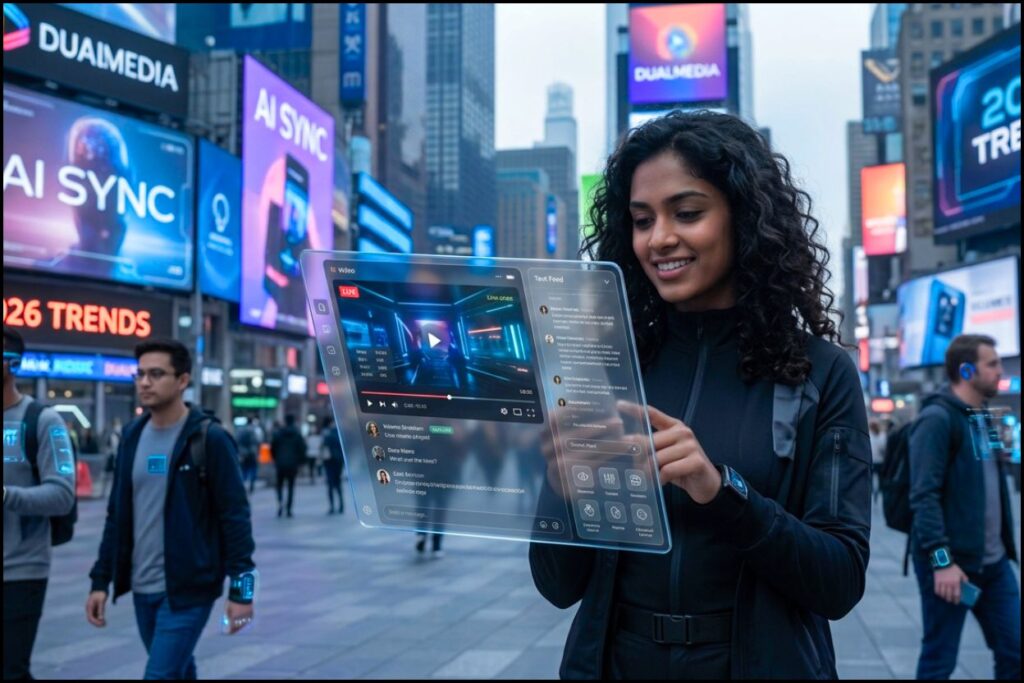
The digital landscape has transformed significantly as we move through 2026, making the application mobile dualmedia a cornerstone of modern content consumption. High-speed connectivity and the demand for immersive experiences have pushed developers to rethink how we interact with our screens. Consequently, users now expect more than just static images or simple video playback from their handheld devices. This shift has led to the rise of sophisticated platforms that blend various media types into a single, seamless interface.
The Evolution of Mobile Media Integration
In the early days of smartphones, apps were often limited to one primary function, such as displaying text or playing music. However, the introduction of the application mobile dualmedia concept changed the game by allowing simultaneous streams of information. Therefore, users can now engage with interactive video content while reading real-time data overlays without any lag. This evolution was driven by the need for efficiency and the desire for a more holistic digital experience.
Furthermore, the hardware capabilities of 2026 flagship phones have finally caught up with ambitious software designs. Because modern processors can handle multiple high-definition streams, the application mobile dualmedia operates with unprecedented fluidity. This technological leap ensures you no longer have to choose between different types of engagement. Instead, you can enjoy a unified environment that caters to all your sensory preferences.
Key Features of the Application Mobile DualMedia
One of the most impressive aspects of a high-quality application mobile dualmedia is its ability to synchronize audio-visual elements with user input. For example, as you scroll through a news feed, the background audio adjusts to match the mood of the article you are currently viewing. Additionally, integrated haptic feedback provides a physical dimension to the digital interaction, making the experience feel more tangible and grounded.
In addition to sensory synchronization, these applications prioritize user-centric customization. You can easily toggle between different media layers, such as switching from a purely visual mode to a text-heavy informative layout. Since the application mobile dualmedia is designed with flexibility in mind, it adapts to your specific environment, whether you are on a noisy train or in a quiet office. This adaptability is exactly why such platforms have become indispensable in our daily routines.
How DualMedia Technology Enhances User Engagement
Engagement is the metric that defines the success of any modern digital platform. By utilizing the application mobile dualmedia, creators can capture and hold the attention of their audience more effectively than ever before. For instance, educational apps now use dual-stream technology to show a lecture on one half of the screen while providing interactive diagrams on the other. This dual approach helps improve information retention and prevents fatigue associated with long, monotonous videos.
Moreover, the psychological impact of multi-sensory stimulation cannot be overstated. When you use an application mobile dualmedia, your brain processes information through multiple channels simultaneously. This leads to a deeper emotional connection with the content, which is particularly useful for brand storytelling and digital marketing. Consequently, businesses that adopt this technology see a marked increase in user loyalty and time spent within their ecosystems.
Improving Accessibility Through Multi-Layered Content
Accessibility remains a top priority for developers in 2026. The application mobile dualmedia plays a vital role here by providing alternative ways to consume the same information. For example, a user with visual impairments might rely on the high-fidelity audio stream, while someone in a loud environment can use the detailed text and graphic overlays. Therefore, these applications ensure that no one is left behind in the digital age.
Furthermore, the inclusion of real-time translation features within the application mobile dualmedia has broken down global communication barriers. As you watch a live broadcast from another country, the app can provide an instant text translation in your preferred language. This happens without interrupting the primary media stream, demonstrating the power of dual-processing. In addition, these features are now more accurate than ever, thanks to advanced machine learning algorithms integrated directly into the mobile framework.
The Role of Artificial Intelligence in Media Syncing
Artificial intelligence is the silent engine that powers every modern application mobile dualmedia. It analyzes user behavior in real-time to predict which media layer should be prioritized. For instance, if the AI detects that you are skimming through text, it might enhance the visual cues to help you find key information faster. Conversely, if you pause to look at an image, the app can provide deep-dive audio commentary to explain the context.
In addition, AI helps optimize data usage, which is crucial for mobile users on limited plans. The application mobile dualmedia can intelligently downscale one stream while maintaining the quality of another based on your current network strength. Because of this smart resource management, you get a consistent experience regardless of your connection quality. This level of sophistication was merely a dream a few years ago but is now a standard expectation for 2026.
Choosing the Right Application Mobile DualMedia for Your Needs
With so many options available in the market, selecting the best application mobile dualmedia can feel overwhelming. However, focusing on a few key criteria can simplify the process. First, look for an app with a clean, intuitive user interface that avoids cluttering the screen with unnecessary icons. Since you will be managing two media streams at once, space is at a premium, and every pixel counts.
Second, consider the app’s compatibility with your existing devices. A top-tier application mobile dualmedia should work seamlessly across your smartphone, tablet, and even wearable tech. For example, you might want to start watching a video on your phone and then have the audio stream continue on your smartwatch when you step away. This kind of cross-device harmony is a hallmark of a well-developed platform in the current year.
Performance and Battery Optimization
High-performance apps often come with the downside of heavy battery drain. However, the best application mobile dualmedia developers have found ways to mitigate this through efficient coding and hardware acceleration. When testing an app, pay close attention to how much heat your device generates during extended use. If the phone stays cool, it is a good sign that the software is well-optimized for your specific processor.
Additionally, background processing is another area where quality shows. A premium application mobile dualmedia should be able to handle notifications and other background tasks without stuttering or crashing. Therefore, check user reviews specifically for stability and performance metrics. Reliability is just as important as fancy features when it’s an app you plan to use every single day for work or entertainment.
Security and Data Privacy in 2026
In an era where data is more valuable than gold, privacy features are non-negotiable. Every application mobile dualmedia you install should have clear, transparent privacy policies. For instance, the app should ask for permission before accessing your camera, microphone, or location data. Moreover, ensure end-to-end encryption for any personal data the app syncs to the cloud.
In addition to basic permissions, modern apps now include “Privacy Dashboards” that show you exactly how your data is being used. Since the application mobile dualmedia often handles sensitive media, ensuring that your content isn’t being shared with third parties without your consent is vital. Therefore, always take five minutes to review the security settings before you dive into the full experience. Protecting your digital footprint is a responsibility that starts with the apps you choose to trust.
Future Trends for Application Mobile DualMedia Technology
As we look beyond 2026, the future of the application mobile dualmedia appears even more exciting. We are already seeing the early stages of augmented reality (AR) integration, where the dual-media streams move beyond the screen and into the world around us. For example, you could point your phone at a historical landmark and see a historical reconstruction on the screen while hearing a narrator tell its story. This blend of physical and digital worlds is the next frontier for mobile developers.
Furthermore, the rise of 6G technology is expected to provide the bandwidth necessary for even more complex media combinations. Imagine an application mobile dualmedia that supports holographic projections or 8K 360-degree video without any buffering. While this sounds like science fiction, the groundwork is being laid today. Consequently, staying up to date with the latest app versions ensures you are ready to take advantage of these breakthroughs as they arrive.
Integration with Smart Home Ecosystems
The application mobile dualmedia is also becoming a central hub for controlling smart home environments. You can view a live feed of your security cameras while simultaneously adjusting the lighting and temperature of your home through a secondary control layer. This dual-purpose functionality saves time and reduces the need to switch between multiple apps. In addition, voice commands are now much more integrated, enabling hands-free operation of the dual streams.
Moreover, the social aspect of these apps is evolving. We are seeing “Watch Party” features where multiple users can engage with the same application mobile dualmedia content in real-time from different locations. You can see your friends’ reactions via video thumbnails while the main content plays in the center. This creates a shared experience that mimics being in the same room, further proving that mobile apps are about more than just personal use—they are about connection.
Content Creation and the DualMedia Revolution
It is not just about consuming content; the application mobile dualmedia is also a powerful tool for creators. Mobile journalists and influencers use these platforms to record interviews while simultaneously live-streaming their screen to their followers. This ability to multi-task on a single device has democratized high-quality production. Therefore, anyone with a modern smartphone can now produce content that was previously only possible for professional studios.
Finally, the educational sector is reaping massive benefits from these advancements. Students can now participate in virtual classrooms where the application mobile dualmedia provides a live video of the teacher alongside a shared digital whiteboard. This interactive setup has made remote learning much more engaging and effective for millions of people worldwide. As these tools continue to refine, the gap between physical and digital education will likely disappear entirely, leading to a new era of global knowledge sharing.
Advanced Monetization and Ecosystem Growth in 2026
The business model behind the application mobile dualmedia has undergone a radical transformation. In 2026, developers no longer rely solely on intrusive advertisements that disrupt the user flow. Instead, they use integrated monetization strategies that feel natural to the dual-media experience. For example, a fitness app might offer a premium secondary stream that provides real-time biometrics from a personal trainer during your workout video. This value-added approach encourages users to subscribe rather than feeling forced into it.
Furthermore, the rise of the “Super App” ecosystem means that your application mobile dualmedia is likely part of a larger network of services. You might use one app for media consumption that also handles your digital payments and social interactions. Therefore, data from your dual-media usage helps the ecosystem deliver hyper-personalized offers that are actually relevant to you. This synergy among services creates a more efficient and rewarding experience for the end user.
The Impact of Edge Computing on App Speed
Speed is the ultimate luxury in the digital world. By leveraging edge computing, the application mobile dualmedia can process data closer to the user, drastically reducing latency. This is particularly important for live-streaming and interactive gaming where even a millisecond of delay can ruin the experience. Because the heavy lifting is done at the edge of the network, your mobile device consumes less power and stays responsive even during intense sessions.
Additionally, edge computing allows for more complex AI operations to run locally on your device. This means the application mobile dualmedia can perform high-end tasks such as real-time video upscaling or background removal without requiring a constant high-speed connection to a central server. Consequently, you get a premium experience even in areas with spotty internet coverage. This technological shift is one of the primary reasons why dual-media applications have become so reliable and popular in 2026.
Environmental Sustainability in App Development
As global awareness of digital carbon footprints grows, the application mobile dualmedia industry is moving toward more sustainable practices. Developers are now optimizing their code to ensure data transfer is as efficient as possible, thereby reducing data center energy consumption. Furthermore, many apps now include a “Green Mode” that lowers the resolution of non-essential streams to save battery and reduce environmental impact.
In addition, companies are increasingly transparent about their sustainability goals. When you choose an application mobile dualmedia, you can often see a report on the carbon offset efforts of the development team. This transparency helps socially conscious users make informed decisions about the software they use. Therefore, being “green” is no longer just a marketing slogan; it is a core functional requirement for successful mobile applications in 2026 and beyond.
Conclusion: Embracing the DualMedia Lifestyle
The application mobile dualmedia has officially moved from a niche concept to a mainstream necessity in 2026. It offers a level of depth and interactivity that traditional apps simply cannot match. By blending text, audio, video, and interactive elements, these platforms provide a rich tapestry of information that caters to the modern, fast-paced lifestyle. Whether you are using it for professional growth, academic excellence, or pure entertainment, the benefits are clear.
As you continue to explore the digital world, keep an eye out for apps that prioritize this dual-stream approach. The efficiency gained by not having to flip between screens will significantly improve your productivity and enjoyment. Furthermore, the constant updates in AI and connectivity mean that your application mobile dualmedia will only get smarter and faster over time. Embrace this change, stay curious, and make the most of the incredible technology available at your fingertips today.
