

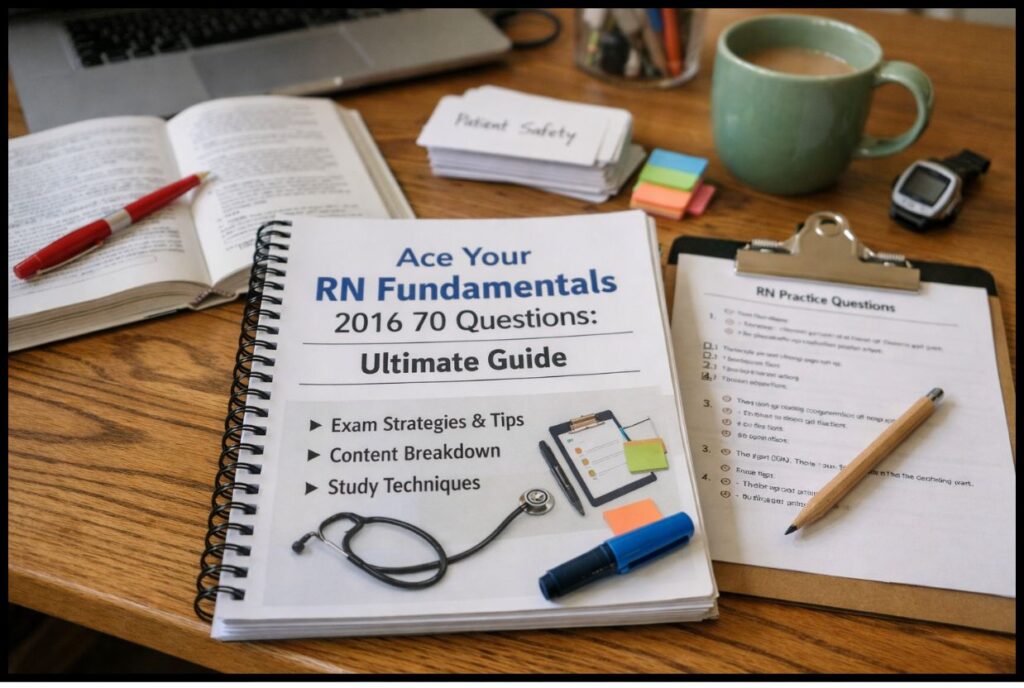
Preparing for the RN fundamentals 2016 70 questions exam can be challenging, yet it is a crucial step in achieving success as a registered nurse. This guide breaks down essential strategies, content areas, and smart study techniques to help you confidently tackle these questions. Whether you are new to nursing or reviewing foundational knowledge, understanding how to approach these exam-style questions will improve your critical thinking and clinical judgment.
In this comprehensive article, you will learn how to analyze and answer the rn fundamentals 2016 70 questions with accuracy, clarity, and confidence. We will explore common topics, test-taking tips, content breakdowns, and how to strengthen your knowledge base to perform at your best.
What Are RN Fundamentals?
Defining Fundamentals in Nursing
Nursing fundamentals are the essential principles and skills every nurse must master to provide safe, effective patient care. These include clinical procedures, patient communication, ethical considerations, and foundational science.
The RN fundamentals 2016 70 questions format often reflects real-world nursing scenarios that require both knowledge and judgment. These questions may examine areas such as infection control, patient safety, documentation standards, and basic clinical procedures.
Why Fundamentals Matter in Practice
Understanding fundamentals prevents errors, enhances patient outcomes, and strengthens professional confidence. When you know basic nursing concepts inside out, responding to questions becomes a natural extension of your clinical reasoning.
Breakdown of RN Fundamentals 2016 70 Questions Content
To perform well on the like those found in the rn fundamentals 2016 70 questions format, it helps to categorize the content. Below are key domains that commonly appear:
Patient Safety and Infection Control
Patient safety is the cornerstone of nursing practice. Questions in this domain test your ability to:
- Protect patients from harm
- Implement standard precautions
- Recognize infection risk factors
For example, you may encounter scenarios that require prioritization of actions to prevent infection or promote safe environments.
Nursing Assessment and Clinical Skills
This area evaluates your ability to conduct basic assessments and interventions. Topics include:
- Vital signs interpretation
- Wound care basics
- Pain assessment techniques
Questions might describe patient conditions and ask you to select the most appropriate assessment or next step.
Communication and Documentation
Effective communication with patients and healthcare teams is essential. Documentation must be accurate, timely, and clear. The format often tests how you:
- Document clinical findings
- Communicate with families
- Use therapeutic communication
Understanding documentation standards reduces errors and improves interdisciplinary collaboration.
Ethical and Legal Considerations
Healthcare professionals must navigate ethical dilemmas and comply with laws that protect patient rights. Questions can involve:
- Patient confidentiality
- Informed consent
- Ethical principles like autonomy and beneficence
These topics reflect real-world nursing responsibilities.
Study Strategies for RN Fundamentals
Preparing effectively for a rn fundamentals 2016 70 questions style exam requires a structured study plan. Here are proven strategies that deliver results.
Create a Study Schedule
A study plan helps you allocate time to each topic based on your strengths and weaknesses. Prioritize areas where you feel less confident, and rotate subjects to avoid burnout.
For example, dedicate:
- Morning sessions to clinical skills
- Afternoon sessions to patient safety concepts
- Evenings to communication and documentation
This structured rhythm enhances retention and study focus.
Use Active Learning Techniques
Passive reading alone won’t ensure success. Instead, engage with the material actively through:
- Flashcards
- Practice questions
- Teaching another student
Rephrasing definitions in your own words improves memory and understanding. Applying these techniques to the rn fundamentals 2016 70 questions topics will deepen your knowledge.
Practice with Realistic Questions
Answering practice questions that mimic exam format builds confidence. When reviewing answers, always read explanations to understand why an option is correct or incorrect.
This reflection sharpens critical thinking and enhances clinical reasoning skills, which are essential for responding to the rn fundamentals 2016 70 questions style scenarios.
Test-Taking Tips for RN Fundamentals 2016 70 Questions
Knowing content is important, but approaching questions strategically can significantly improve your performance. Use these tips when tackling the rn fundamentals 2016 70 questions.
Read Each Question Carefully
Before choosing an answer, read the entire question and all options. Pay attention to keywords like “first,” “best,” “priority,” and “initial action.” These prompt you to think critically about the most appropriate response.
Taking a few extra seconds to analyze the question prevents careless mistakes and increases accuracy.
Eliminate Wrong Answers First
When unsure of the correct choice, eliminate clearly incorrect options. Narrowing down choices increases your chances of selecting the correct answer, especially in questions with similar answer choices.
This technique is especially helpful for complex scenarios in the rn fundamentals 2016 70 questions content.
Manage Your Time Efficiently
Time management is essential. If a question seems unusually difficult, don’t dwell on it. Mark it, move on, and return later if time permits. Maintaining steady progress through all questions ensures you complete the exam.
Prioritizing time prevents stress and allows thoughtful responses.
Common Mistakes to Avoid
Many nursing students encounter similar pitfalls when preparing for or taking exam-style questions like those in the rn fundamentals 2016 70 questions format.
Ignoring the Stem of the Question
The stem contains important information that guides your response. Ignoring it can lead to choosing answers that seem correct but do not address the main concern.
Always break down the stem to identify the core issue before evaluating options.
Misreading Priority or Order Words
Words like “priority,” “initial,” or “best next step” change the nature of the response expected. Misinterpreting these can lead to incorrect answers.
Practicing with sample questions helps train your mind to recognize and respond appropriately to priority cues.
Failing to Practice Time-Bound Sets
Studying without timed practice sessions may leave you unprepared for the pacing of an actual exam. Simulating real test conditions improves focus, reduces anxiety, and strengthens time management.
Regular timed practice ensures readiness for the rn fundamentals 2016 70 questions style challenges.
Building Confidence for the Exam
Confidence grows with preparation, review, and self-reflection.
Review What You Missed
After practice sessions, review incorrect answers. Identify why you missed them and revisit the concept. This reflection turns weaknesses into strengths.
Understanding your errors prevents repeating them on exam day.
Join Study Groups or Peer Discussions
Discussing topics with peers creates opportunities for shared learning. Explaining concepts to others reinforces your knowledge and reveals new perspectives.
Study groups can make preparation engaging and effective.
Take Care of Yourself
Physical and mental health influence performance. Good sleep, balanced nutrition, and short breaks enhance your ability to focus and retain information.
When your body and mind are rested, you think more clearly during study and testing.
Applying Knowledge in Clinical Settings
Answering the rn fundamentals 2016 70 questions is not just about the exam. These fundamentals are the foundation of quality nursing care. When you understand core principles, you apply them in real clinical situations with confidence.
For example, knowing how to prevent infection affects how you wash hands, prepare sterile fields, and interact with patients. These habits protect patients and build your professional reputation.
Similarly, strong communication skills improve patient understanding and satisfaction, which are key components of quality care.
Real-World Scenarios You May Encounter
To bring your preparation to life, here are examples of real-world scenarios that reflect the type of thinking needed for the rn fundamentals 2016 70 questions:
- A patient has a sudden change in vital signs. What is your first action, and why?
- A family asks about medication side effects. How do you respond clearly and accurately?
- You notice a breach in sterile technique. What steps do you take immediately?
These examples require application of clinical judgment, ethical reasoning, and communication skills. Practicing such scenarios builds competence and confidence.
Conclusion
Success in answering rn fundamentals 2016 70 questions comes from consistent effort, active engagement with material, and strategic test-taking. By organizing your study plan, practicing regularly, and reflecting on your learning process, you strengthen your nursing foundation.
Remember, nursing fundamentals are not just topics to memorize—they are principles that guide safe, compassionate, and professional care. As you prepare, visualize how each concept connects to real patient interactions and clinical decisions.
With focused preparation, strong study habits, and a clear understanding of fundamental nursing principles, you are well-equipped to excel in your exam and in your nursing career.
READ MORE : Zuyomernon System Basketball: Complete 2026 Guide
