

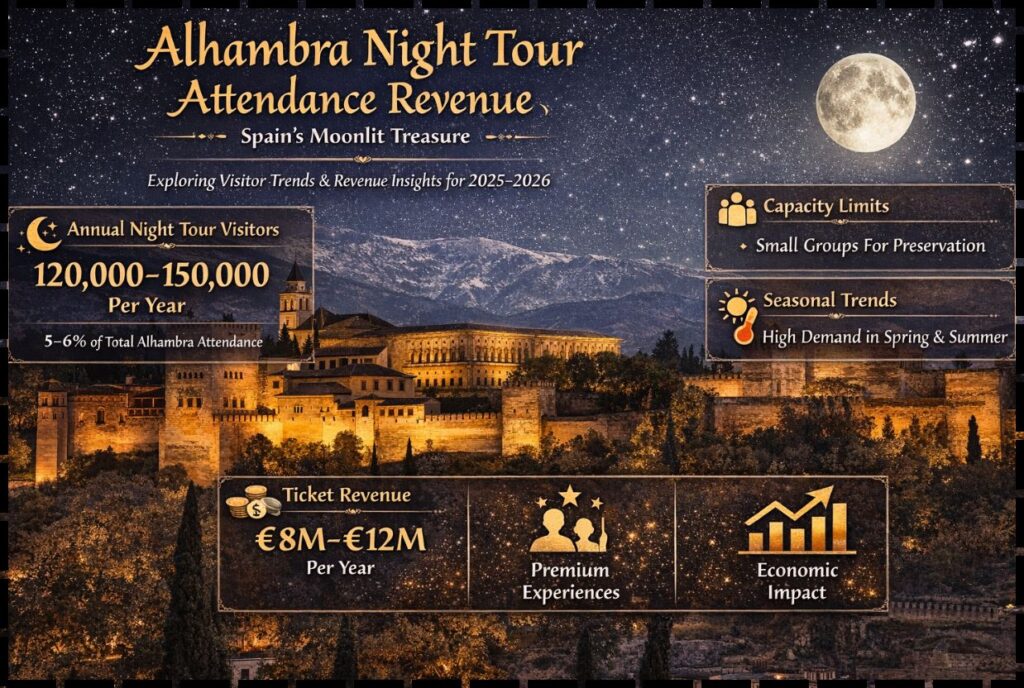
The Alhambra in Granada, Spain, is one of the world’s most iconic historical sites. Its majestic architecture, intricate Islamic design, and rich history draw millions of visitors each year. Beyond its daytime popularity, the Alhambra night tour attendance revenue has emerged as a distinct and valuable economic contributor—blending cultural allure with financial viability. In this detailed and SEO‑friendly article, we unpack attendance trends, revenue mechanisms, economic impacts, ticketing dynamics through 2025 and 2026, and why night tours are gaining prominence as a strategic asset.
What Is the Alhambra Night Tour?
An evening experience at the Alhambra offers visitors a chance to explore its ancient halls, gardens, and palaces after sunset. Unlike daytime visits, night tours emphasize ambiance and fewer crowds. They typically showcase illuminated architectural details and quiet pathways, creating a unique atmosphere that many cultural travelers seek.
Night tours include access to select areas such as the Nasrid Palaces and parts of the Generalife Gardens, with lighting enhancing the experience for visitors. Since night tours operate under stricter schedules and conservation limits, they require specialized management. Opportunities such as guided tours or themed experiences further distinguish these evening sessions from regular daytime visits.
How Attendance Drives Night Tour Revenue
Attendance is the heartbeat of revenue generation. Even though night tours represent a smaller fraction of total visitors, they still contribute significantly to the overall financial health of the monument.
Annual Night Tour Visitor Numbers
Night tour attendance is intentionally limited due to conservation guidelines. Approximately 120,000 to 150,000 visitors attend night tours each year. This is a relatively small portion compared to the 2.7 million total annual visitors the Alhambra receives, typically making up about 5–6% of overall attendance.
Seasonality plays an important role in attendance figures. In peak months like April through October, night tour participation rises as warm evenings and high tourism flows encourage visitors to explore after dark. During shoulder or cooler seasons, attendance dips but remains steady with dedicated cultural travelers.
Capacity and Conservation Influence on Attendance
Conservation rules set by UNESCO and the Patronato de la Alhambra y Generalife restrict how many people can enter at once. Night tours often limit sessions to a few hundred participants to ensure preservation of fragile surfaces and manage crowd movement.
While these attendance caps naturally restrict revenue potential, they also elevate demand during certain dates and drive interest in premium experiences or guided tours.
How Alhambra Night Tour Attendance Translates into Revenue
Understanding the connection between attendance and revenue requires examining pricing models and spending behavior.
Ticket Pricing Structure
Night tour ticket prices vary based on experience type and season. Standard evening access to the Nasrid Palaces often ranges in the mid-teens in euros, while access to gardens or combined experiences can vary slightly lower or higher. Premium offerings, such as guided night tours or special thematic sessions, are priced higher to reflect the exclusivity of the experience.
Prices are strategically set to be competitive yet profitable. Dynamic pricing is sometimes used to balance demand and revenue potential, especially during peak travel months.
Direct Revenue from Tickets
Recent estimates suggest that Alhambra night tour attendance revenue ranges from approximately €8 million to €12 million per year. This figure reflects direct ticket sales from standard night access plus additional fees from guided or specialized tours.
Although night tours represent a smaller visitor share, the per-visitor revenue can be relatively high due to:
- Specialty pricing for evening experiences
- Higher acceptance of guided or premium ticket options among night tour guests
- Willingness to pay for unique ambiance and fewer crowds
Impact of Ancillary Spending
Beyond ticket income, night tour visitors often spend more on ancillary experiences. Many of these attendees dine in local restaurants, take taxis or transport services, and book overnight stays in Granada—boosting economic activity in the city.
Although these indirect economic contributions do not count as direct Alhambra night tour attendance revenue, they significantly amplify the financial impact of night tourism on Granada’s broader economy.
Night Tours vs Daytime Attendance: A Comparative Look
It is helpful to contrast night tour performance with daytime visitation to appreciate the strategic role of evening experiences.
Daytime Attendance and Revenue
Daytime visits to the Alhambra generally attract millions of visitors. Total annual visitors have approached record levels, nearing the heritage site’s operational cap (around 2.7 million). These visits generate substantial ticket revenue, often exceeding many times that of night tours.
Night Tour Revenue Efficiency
Night tours operate fewer hours and accommodate fewer people, yet they often deliver a high revenue-to-visitor ratio. Because visitors are willing to pay for the exclusive night ambiance, average revenue per attendee can be comparatively strong.
Even with reduced total numbers, night tours contribute a notable share of the site’s ticket revenue portfolio due to focused pricing strategies and premium options.
Trends and Changes in Night Tour Attendance and Revenue
Tourism trends and revenue figures evolve over time, influenced by global travel patterns, local conditions, and operational strategies.
Post-Pandemic Recovery
The COVID-19 pandemic temporarily disrupted attendance worldwide, including at heritage sites like the Alhambra. Night tour attendance and revenue dipped sharply during closures but recovered steadily as travel resumed. Post-2023 figures showed night tour participation climbing back toward, and even beyond, pre-pandemic levels in some cases.
This recovery underscores the resilience of cultural tourism and the sustained demand for distinctive experiences like night visits.
Rising Visitor Demand
Over recent years, international tourism has grown, bringing more visitors from the United States, Europe, and other global markets. Night tours have benefitted from this growth, especially among audiences seeking quieter, more atmospheric visits compared to crowded daytime slots.
Seasonality and Weather Effects
Night tour attendance and therefore Alhambra night tour attendance revenue remain vulnerable to seasonal and weather fluctuations. Pleasant evenings in summer and early autumn encourage attendance, while cooler or wet conditions can deter visitors and lead to revenue reductions due to cancellations.
Strategic Importance of Night Tours
Why do night tours matter beyond attendance and ticket sales? They serve several strategic purposes:
Heritage Preservation
Night tours help disperse visitor flows, easing pressure on daytime operations. This scheduling diversity helps protect fragile historical surfaces and reduces overcrowding in peak hours.
Enhanced Visitor Experience
The evening setting creates a different sensory experience. Cool temperatures, distinctive lighting, and fewer crowds contribute to heightened appreciation of the architecture and history.
Economic Diversification
Night tours contribute to total Alhambra night tour attendance revenue in a manner that complements daytime income. With careful planning, they can ensure steady year-round engagement, especially during transitional tourism seasons.
Future Outlook: 2025 and Beyond
Looking ahead into 2025 and 2026, projections for Alhambra night tour attendance revenue remain optimistic. Strategic insights from tourism analysts and heritage managers point to:
- Continued growth in international attendance
- Refined pricing strategies for guided and premium evening experiences
- Technological enhancements in ticketing and visitor engagement
- Potential expansion of night tour options for specific cultural events
With these elements in place, night tour revenue is expected to maintain or grow its contribution to the Alhambra’s financial model and support ongoing conservation and visitor service initiatives.
Conclusion
The Alhambra night tour attendance revenue represents a vibrant and valuable segment of Granada’s tourism economy. Despite operating at a smaller scale compared to daytime visits, night tours deliver significant financial value through strategic pricing, unique visitor experiences, and enhanced spending patterns. By understanding the link between attendance, pricing dynamics, seasonal trends, and broader economic impacts, it becomes clear why these evening tours are an essential part of Alhambra’s long-term sustainability and appeal.
Through thoughtful management and continued investment in visitor experiences, night tours will remain an illuminating way to experience one of the world’s most treasured monuments—both culturally and economically
READ MORE : Unlocking the Power of Provascin for Heart & Health Support in 2026
