

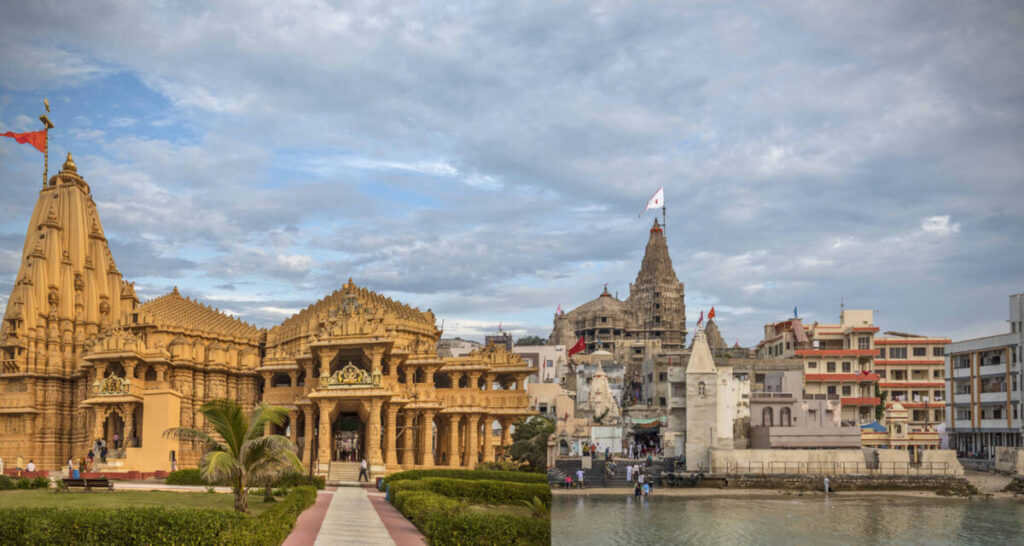
The search for spiritual awakening often leads pilgrims to the sacred shores of Gujarat. A comprehensive dwarka somnath package offers a seamless journey through the heart of India’s Vedic heritage, connecting the “Golden City” of Lord Krishna with the eternal shrine of Lord Shiva. This pilgrimage is more than just a travel itinerary; it is a profound immersion into the legends of the Puranas and the architectural grandeur of ancient India. By choosing a well-structured dwarka somnath package, devotees can focus entirely on their prayers and rituals, leaving the logistics of transportation and accommodation to expert hands.
The Significance of Dwarka in Hindu Mythology
Dwarka, situated on the western tip of the Saurashtra peninsula, is revered as one of the four sacred Char Dham sites. Known as the kingdom of Lord Krishna, the city is steeped in history that dates back thousands of years. The Dwarkadhish Temple, also called Jagat Mandir, stands as the centerpiece of this holy land. Built on 72 pillars, the five-storied limestone structure is a masterpiece of Chalukyan architecture.
Pilgrims visiting Dwarka often feel a deep sense of peace as they witness the fluttering of the 52-yard flag atop the temple spire, which represents the various administrative departments of Krishna’s kingdom. The confluence of the Gomti River with the Arabian Sea adds a layer of natural beauty to the spiritual atmosphere. Taking a holy dip in the Gomti Ghat is considered a vital part of the purification process before entering the main sanctum.
Witnessing the Eternal Glory of Somnath Jyotirlinga
The journey then moves toward the southern coast of Saurashtra to Somnath, the “Shrine Eternal.” As the first of the twelve Jyotirlingas, Somnath holds a position of supreme importance in Shaivism. The temple has survived numerous destructions over centuries, standing today as a symbol of the indomitable spirit of Indian culture.
The current temple, built in the Kailash Mahameru Prasad style, reflects the brilliance of modern Indian masonry while honoring ancient design principles. The “Baan Stambh” or Arrow Pillar at the temple complex is a fascinating geographical marker, claiming that a straight line from that point to the South Pole encounters no landmass. Witnessing the evening Aarti and the Sound and Light show provides a deep understanding of the temple’s resilient history.
Must-Visit Sites Included in the Itinerary
A standard travel plan covers several peripheral sites that enrich the cultural experience. In Dwarka, the journey is incomplete without a visit to Bet Dwarka. Reachable by a short boat ride, this island is believed to be the actual residence of Lord Krishna. Nearby, the Nageshwar Jyotirlinga serves as another major spiritual milestone.
Between Dwarka and Somnath lies Porbandar, the birthplace of Mahatma Gandhi. Kirti Mandir, a memorial dedicated to the Father of the Nation, offers a quiet pause for reflection. Additionally, the Sudama Temple in Porbandar honors the legendary friendship between Krishna and his devotee Sudama. In Somnath, visitors should also spend time at the Bhalka Tirth, the site where Lord Krishna is said to have left his mortal body.
Rituals and Darshan Timings for Devotees
Time management is crucial for a successful pilgrimage. The Dwarkadhish Temple usually opens at 6:30 AM for Mangla Aarti and closes in the afternoon, reopening for evening prayers. Understanding these schedules helps in avoiding long queues and ensures a peaceful Darshan.
In Somnath, the temple is open from 6:00 AM to 9:00 PM. The most sought-after experiences include the morning Mahapuja and the evening Aarti, where the sound of drums and bells creates a powerful vibrational energy. If you are traveling during festivals like Shravan month or Janmashtami, expect larger crowds and plan your movements accordingly.
Best Time to Plan Your Gujarat Pilgrimage
The coastal climate of Gujarat is most pleasant during the winter months, specifically from October to March. During this period, the weather remains cool and breezy, making it ideal for visiting temples and taking boat rides to Bet Dwarka.
While the monsoon season (July to September) brings a lush green charm to the landscape, the sea can be rough, occasionally affecting boat services. Summers (April to June) can be quite hot, with temperatures often exceeding 35 degrees Celsius. If you choose to travel during the summer, it is advisable to schedule temple visits for early morning or late evening to stay comfortable.
Local Cuisine and Cultural Experiences
Gujarat is famous for its hospitality and vegetarian culinary delights. While on this circuit, indulging in a traditional Gujarati Thali is a must. The meal typically includes a variety of lentils (dal), vegetables (shaak), rotli, rice, and snacks like dhokla or khaman. The sweet and savory balance is a unique characteristic of the local food.
Beyond the food, the vibrant handicrafts of the region offer a glimpse into the artistic heritage of Saurashtra. From Bandhani textiles to intricate beadwork, the local markets are filled with souvenirs that reflect the colorful spirit of Gujarat. Interacting with the local communities and witnessing traditional folk music or dance can add a beautiful layer to your spiritual journey.
Transportation and Connectivity in the Region
The Dwarka-Somnath circuit is well-connected by road and rail. Most travelers arrive at Jamnagar or Rajkot airports before starting their road trip. The highway connecting Dwarka and Somnath is well-maintained, offering views of the coastline and rural Gujarat.
State transport buses and private taxis are readily available. For those who prefer trains, Dwarka and Veraval (the station for Somnath) have regular connectivity to major Indian cities. Including a reliable vehicle in your package ensures that you can travel at your own pace and stop at smaller shrines or viewpoints along the way.
Preparation Tips for a Soulful Journey
Packing for a pilgrimage requires a balance of comfort and respect for local customs. Light cotton clothing is recommended for most of the year, though a light jacket is necessary for winter mornings. Always carry a pair of comfortable walking shoes, as temple complexes can be vast.
It is also important to carry a basic medical kit, hydration supplies, and some dry snacks. Since photography is prohibited inside most sanctums, focus on the internal experience rather than capturing every moment digitally. Respecting the silence and sanctity of the prayer halls enhances the spiritual benefit of the visit.
Why This Circuit is Essential for Seekers
The combination of Dwarka and Somnath represents the two great pillars of Hindu faith—Vishnu and Shiva. This journey allows seekers to understand the diverse yet unified nature of Indian spirituality. The legends associated with these sites have shaped the moral and cultural fabric of the country for millennia.
Whether you are looking for historical insights, architectural wonders, or a deep religious connection, this region delivers on every front. The vastness of the Arabian Sea serves as a constant backdrop, reminding visitors of the infinite nature of the divine.
Final Thoughts on Your Spiritual Path
Concluding your trip leaves you with a sense of fulfillment and mental clarity. As you wrap up your dwarka somnath package, the memories of the evening Aarti and the sound of the crashing waves will stay with you long after you return home. For those who find their calling in high-altitude spiritual challenges after this coastal experience, looking into kailash mansarovar tour packages might be the next step in their journey of faith. Both paths, though geographically distant, lead to the same destination of inner peace and divine grace.
