

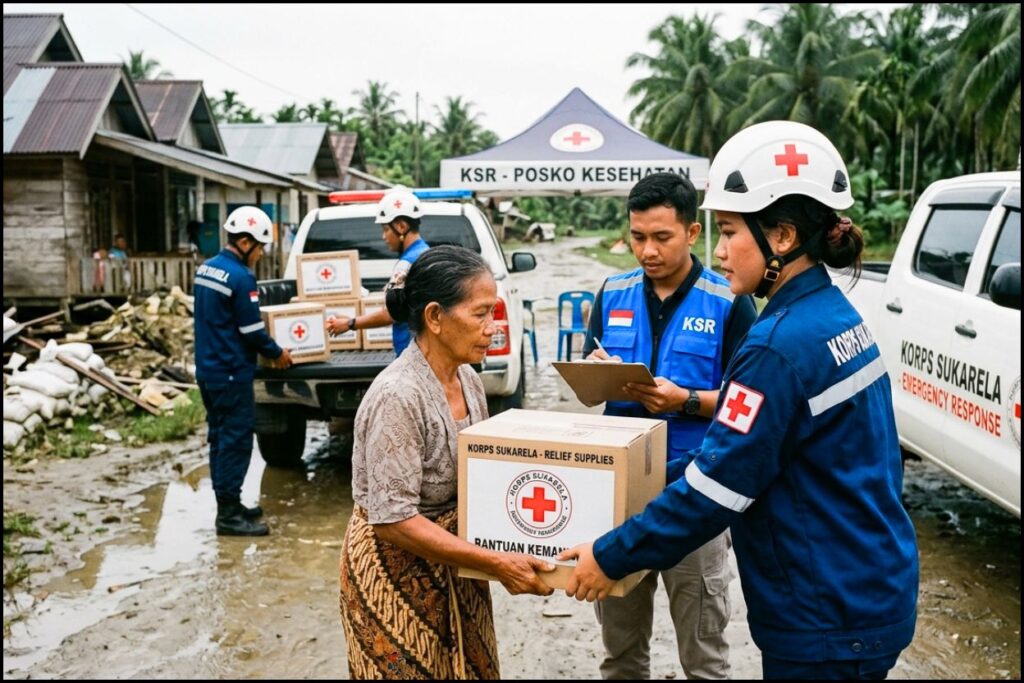
The landscape of humanitarian work is shifting, and the Korps Sukarela is leading the way. As we navigate through 2025 and enter 2026, the demand for organized volunteerism has never been higher. This organization, widely known as KSR, serves as the backbone of community-based emergency response and social welfare.
Volunteers in this corps are not just helpers; they are highly trained specialists who bridge the gap between official agencies and the public. In this comprehensive 2026 update, we will explore how the Korps Sukarela has modernized its operations to meet contemporary global challenges.
The Strategic Mission of Korps Sukarela in 2025
The core mission of the Korps Sukarela remains steadfast in its dedication to human life and dignity. However, in 2025, the strategy has shifted toward “Anticipatory Action.” This means that volunteers are now trained to use data and climate forecasts to act before a disaster strikes. This shift has significantly reduced property and life losses in high-risk zones.
In addition to disaster mitigation, the organization has expanded its role in urban social health. Volunteers are now deeply involved in managing the mental health repercussions of modern living. By providing community-level psychological support, they ensure that the social fabric remains strong during times of stress.
Modernizing the Volunteer Curriculum
Training programs for the Korps Sukarela have seen a massive update in 2025. The new curriculum incorporates digital literacy as a core requirement for all members. This is because modern humanitarian work requires the ability to navigate complex information systems and digital maps.
Furthermore, there is a renewed focus on specialized “Technical Cells.” These are small groups of volunteers with expertise in specific fields like telecommunications, water sanitation, or logistics. By decentralizing expertise, the Korps Sukarela can deploy specialized help faster than ever before.
2026 Leadership and Organizational Dynamics
As of early 2026, the Korps Sukarela has seen a wave of new leadership across its various units. For example, major university-based units like KSR PMI Unit UPI have recently appointed new chairpersons to lead their 2026 terms. This leadership regeneration is vital for keeping the organization’s energy high and its ideas fresh.
The new leadership teams are focusing heavily on “Accountability and Transparency.” They are using blockchain and other secure digital ledgers to track donation flows and resource distribution. This ensures that every contribution is used effectively and that the public maintains high levels of trust in the organization.
Strengthening Organizational Bylaws
To adapt to the changing legal and social landscape, many units are revising their Statutes and Bylaws (AD/ART). In 2025, these revisions focused on inclusivity and volunteer safety. The goal is to create an environment where anyone, regardless of background, can contribute safely and meaningfully.
These structural changes also include better insurance and health protections for active members. Because the work can be dangerous, the organization is committed to ensuring that its volunteers are cared for as well as the victims they serve.
Disaster Management and Emergency Response in 2026
Disaster response remains the most critical function of the Korps Sukarela. In 2026, the world is facing increasingly complex climate-related events. Consequently, the corps has enhanced its “Rapid Deployment Teams” (RDT) to be mobile within sixty minutes of an alert.
These teams are equipped with modular survival kits that allow them to operate independently for up to seventy-two hours. This autonomy is crucial in the immediate aftermath of earthquakes or floods when local infrastructure might be completely destroyed.
Search and Rescue Innovations
Search and Rescue (SAR) operations have become significantly more technical. In 2026, the Korps Sukarela frequently uses AI-driven predictive modeling to identify the most likely locations of missing persons. This technology analyzes terrain and weather data to narrow down search areas, saving precious time.
Moreover, the use of specialized canine units continues to be a staple of KSR operations. These dogs are trained to work alongside technology, providing a human (and animal) touch that machines cannot replicate. The combination of high-tech sensors and trained rescue dogs makes the Korps Sukarela a formidable force in SAR.
Global Digital Transformation and the IFRC 2026 Plan
The International Federation of Red Cross and Red Crescent Societies (IFRC) has unveiled its Global Plan for 2026, which directly impacts the Korps Sukarela. A major pillar of this plan is “Digital Transformation.” The goal is to empower local volunteer networks with the tools they need to lead in their own communities.
By the end of 2025, over 100 national societies had developed digital strategies to improve the speed and quality of humanitarian services. This global movement ensures that a volunteer in a small village has access to the same high-quality data as a professional in a major city.
Protecting Data and Privacy
As volunteering becomes more digital, protecting personal data has become a priority. The Korps Sukarela is implementing strict data protection protocols to ensure that the privacy of vulnerable people is respected. This is especially important in 2026, as digital tools are increasingly used to register refugees and disaster victims.
Volunteers are now trained in “Digital Ethics.” They learn how to collect data responsibly and how to protect themselves from cyber threats. This focus on digital safety is a hallmark of the modern volunteer’s toolkit.
Public Health and First Aid Initiatives
First aid is the most recognized skill of any Korps Sukarela member. In 2025 and 2026, the focus has expanded from physical trauma to “Total Wellness.” This includes infectious disease monitoring and community-based health interventions.
KSR members often act as “Health Scouts,” identifying potential outbreaks of diseases before they become pandemics. Their presence in local neighborhoods allows for early detection and rapid response, which is the key to preventing large-scale health crises.
Enhancing Community Resilience
Resilience is about more than just surviving a disaster; it is about thriving in its aftermath. The Korps Sukarela conducts regular workshops on sustainable living and disaster-resistant building techniques. By educating the public, they reduce the community’s overall vulnerability.
For example, many KSR units in coastal areas are leading mangrove planting initiatives. These natural barriers protect against storm surges and provide a habitat for local wildlife. This type of environmental work is a growing part of the volunteer’s role in 2026.
The Role of Social Media and Public Communication
Communication is a strategic asset for the Korps Sukarela. In 2026, social media is used not just for announcements, but for real-time crisis mapping. When a disaster occurs, volunteers monitor social media to identify where help is most needed.
This “Crisis Crowdsourcing” allows the organization to be incredibly responsive. Furthermore, the corps uses digital platforms to share success stories, which helps in recruiting the next generation of volunteers. Clear, honest communication builds the public support that the organization relies on.
Countering Misinformation
In the digital age, misinformation can be as dangerous as a physical threat. During emergencies, rumors can cause panic and lead people into danger. Members of the Korps Sukarela are trained to provide “Verified Information” to the public.
They work with local influencers and community leaders to ensure that accurate safety tips are widely shared. By becoming a trusted source of truth, the corps helps keep communities calm and organized during stressful times.
Community Development and Social Services
The Korps Sukarela is deeply committed to social justice. Their work often involves reaching out to those who have been forgotten by mainstream society. This includes the homeless, the elderly, and those living in extreme poverty.
In 2026, many KSR units have launched “Mobile Social Units.” These are vans equipped with basic supplies and medical tools that visit underserved neighborhoods. This proactive outreach ensures that everyone has access to basic humanitarian support, regardless of their location.
Supporting the Elderly and Disabled
The aging population is a global trend, and the Korps Sukarela is adapting its services accordingly. Volunteers provide home-based care and social companionship to the elderly. During extreme weather, they ensure that vulnerable individuals have the resources they need to stay safe.
Similarly, the corps advocates for the rights of people with disabilities. They work to ensure that emergency shelters and public spaces are fully accessible. This commitment to inclusion is a core value that drives every action of the Korps Sukarela.
Challenges and Future Outlook for 2026-2027
While the organization has made great strides, challenges remain. The global humanitarian funding gap is a significant hurdle. As needs rise, the Korps Sukarela must find creative ways to sustain its operations with limited resources.
Additionally, the physical and mental safety of volunteers is a constant concern. The organization is investing more in psychological support and safety equipment. Ensuring that volunteers are protected is the only way to maintain a sustainable movement.
The Rise of the “Tech-Humanitarian”
The future of volunteering is hybrid. In 2027, we expect to see the rise of the “Tech-Humanitarian”—a volunteer who is as comfortable with a drone as they are with a bandage. This blend of human empathy and technical skill will define the next decade of the Korps Sukarela.
Artificial intelligence will play an even larger role in predicting needs and optimizing logistics. However, the heart of the organization will always be the individual volunteer who chooses to serve. The human connection remains the most powerful tool in the humanitarian arsenal.
How to Get Involved with Korps Sukarela
Joining the Korps Sukarela is a life-changing experience. Most recruitments happen through local chapters or university units. The process involves a basic orientation followed by comprehensive training in humanitarian principles and technical skills.
Once you are a member, the opportunities for growth are endless. You can specialize in various fields and take on leadership roles within the organization. More importantly, you become part of a global family dedicated to making the world a better place.
Continuous Professional Development
The Korps Sukarela encourages lifelong learning. Even veteran members participate in regular “Refresher Courses” to stay up to date with the latest techniques. This commitment to excellence ensures that the corps is always ready for whatever challenges the future may hold.
Whether you are a student, a professional, or a retiree, there is a place for you in the Korps Sukarela. Your skills and your passion can make a real difference in someone’s life.
Conclusion: The Enduring Spirit of Korps Sukarela
In conclusion, the Korps Sukarela stands as a beacon of hope in a complex world. Their work in 2025 and 2026 has demonstrated that when people come together with a common purpose, they can overcome any crisis.
By embracing technology and maintaining their focus on human dignity, these volunteers are creating a more resilient future. Supporting the Korps Sukarela is an investment in the safety and well-being of our entire society. As we look forward, let us celebrate the spirit of the volunteer—the heart that keeps our communities beating.
