

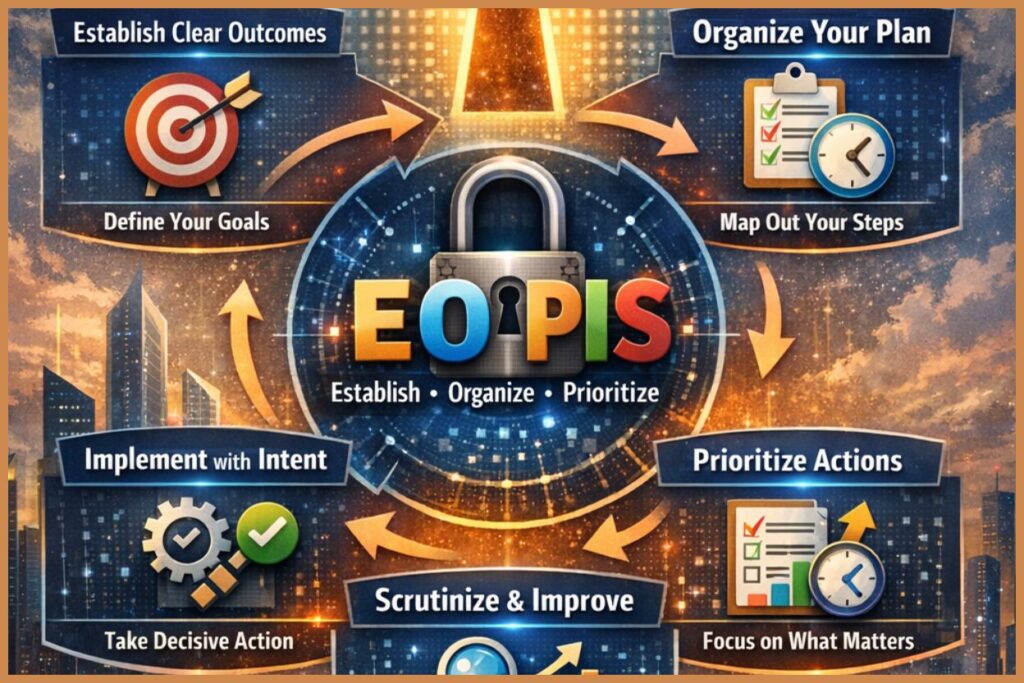
In today’s fast‑moving world, businesses and individuals constantly seek new frameworks to improve performance, clarity, and outcomes. One emerging idea gaining traction is eo pis. While the term may seem unfamiliar at first glance, it carries deep potential for organizing action, setting goals, and driving measurable results across varied domains. In this article, we will explore what eo pis means, how it works, and why it matters for anyone looking to thrive in 2025 and 2026 and beyond.
What Is EO Pis?
At its core, eo pis is a strategic framework that blends essential elements of planning, execution, evaluation, and refinement. It stands for a mindset, a set of practices, and a structured approach to translating ideas into real achievements. By focusing on eo pis, individuals and organizations can unlock clarity, sharpen focus, and create forward momentum.
To understand eo pis fully, we need to break its core elements down into actionable pieces. With this approach, we can apply them across personal growth, business, education, project management, and daily habit development.
The Anatomy of EO Pis
E – Establish Clear Outcomes
The first step in EO Pis involves defining exactly what you want to achieve. If you lack clarity, you will drift. Therefore, you must pinpoint outcomes that are realistic and impactful. Clear outcomes act like a compass guiding every decision you make.
When you begin with a precise destination, you align your energy and attention. Consequently, the rest of your actions fall into place with greater ease.
O – Organize Your Plan
Once you know where you want to go, the next step in eo pis is organizing your plan. This means breaking down your outcome into smaller milestones, tasks, and sequences. A well‑organized plan reduces overwhelm and builds confidence.
For example, if your aim is to increase productivity, you would list steps such as time blocking, tracking progress, and setting benchmarks. Each element of organization adds structure to your work, helping you stay on track.
P – Prioritize Actions
Prioritization is essential in eo pis because not all tasks carry equal weight. Some actions yield higher impact, while others drain time without producing results. Therefore, you must prioritize your tasks based on urgency, importance, and alignment with your outcome.
Using tools like task matrices, leaders and creators can visualize what matters most, then act accordingly. Prioritization also helps reduce stress and refocus your energy on what drives progress.
I – Implement with Intent
At this stage, eo pis shifts from planning to doing. Implementation requires discipline, adaptability, and clarity of purpose. Many people plan well but struggle to execute effectively. However, by linking implementation to clear outcomes and organization, your execution improves drastically.
During implementation, it’s important to review your progress regularly. You should celebrate small wins, adjust strategies when obstacles arise, and stay committed to intentional action.
S – Scrutinize and Improve
The final step in eo pis involves reflection and refinement. After delivering an effort, you must scrutinize outcomes honestly. What worked? What didn’t? What adjustments will amplify your results next time?
This phase turns every experience into a learning opportunity. Without reflection, patterns repeat, and growth stalls. Therefore, the EO Pis approach ensures continuous improvement, fueling long‑term success.
How EO Pis Applies to Personal Growth
Personal growth demands intentional focus and self‑awareness. With eo pis, you can set personal goals, create routines, measure progress, and refine your habits. Whether you are learning a new skill, improving your health, or seeking emotional balance, this structured method brings focus and momentum.
For example, if your goal is to enhance your fitness, follow the epochs steps: define your target, organize your schedule, prioritize workouts, implement consistently, and review your progress weekly. This simple but intentional system helps you stay engaged rather than overwhelmed.
With time, eo pis becomes a mindset. You begin to anticipate challenges and refine your path before problems slow you down. In addition, by applying the cycle consistently, you build resilience, confidence, and clarity.
EO Pis in Business Strategy
In business, clarity and alignment create competitive advantage. The EO Pis framework helps leaders and teams craft strategies that are both bold and actionable. Instead of vague mission statements or disconnected tasks, is brings precise intention to every plan.
Aligning Teams with Objectives
When organizations adopt EO Pis, they clarify company objectives and ensure each department understands its role. This reduces confusion and enhances collaboration. Team members know not just what to do, but why they do it.
For instance, a marketing team aiming to boost engagement could use to define target metrics, organize campaigns, prioritize messaging channels, implement consistently, and review data monthly. With this approach, results become predictable and measurable.
Driving Innovation
Innovation often fails not because ideas lack creativity but because execution falters. By applying EO Pis, companies can evaluate ideas more critically and refine them through structured cycles. This reduces risk and increases the likelihood of breakthroughs.
Moreover, when innovation aligns with clear outcomes, teams can validate assumptions early and pivot when needed. Therefore, eo pis fosters a culture of fast learning and sustained progress.
Education and Learning with EO Pis
Learning becomes more efficient when it follows a structure. With the, students and educators alike can set tangible learning targets, plan pathways, and assess progress. Whether learning a language, mastering math, or practicing art, the framework provides clarity and focus.
Setting Learning Goals
The first step for learners is defining what success looks like. For example, if your goal is to become conversational in a language, your outcome might be to hold a 10‑minute conversation by a specific date. This concrete milestone gives direction to your effort.
Organizing Study Plans
Next, organize your study plan. Decide how much time you will dedicate each day, which materials you will use, and how you will track retention. With a clear structure, you eliminate guesswork and increase consistency.
Prioritizing Study Tasks
Some topics demand more time and effort. Prioritize based on difficulty, relevance, and your own weaknesses. This helps ensure that each study session moves you closer to your outcome.
Implementing with Discipline
Studying consistently is a skill. Treat each study session as intentional work toward your outcome. Reduce distractions and maintain focus, even when motivation fluctuates.
Reviewing and Improving
Finally, reflect on what works. Which study techniques help you remember the most? Are there tools that accelerate practice? By refining your approach regularly, learning becomes more efficient and rewarding.
EO Pis for Daily Habit Formation
Good habits shape long‑term success. The EO Pis methodology helps embed new habits into your daily routine by turning abstract desires into actionable steps.
To build a habit, start with a clear statement like, “I will meditate for 10 minutes each morning.” Then, organize where, when, and how you will do it. Prioritize it by scheduling it at a consistent time. Implement it by doing it daily. Finally, review how well you stick to the habit and adjust the environment or triggers to strengthen consistency.
This method works not just for meditation but for reading, journaling, exercise, nutrition, sleep, and productivity habits. Over time, eo pis helps habits stick and grow stronger.
Common Mistakes When Using EO Pis
Even with a strong framework, people make avoidable errors. Understanding these pitfalls helps you implement EOPIs effectively.
Lack of Clear Outcomes
Vague goals lead to stalled progress. If your outcomes are unclear, you cannot measure success. Always start with specificity. For instance, instead of saying “I want to get better,” say, “I want to increase proficiency by 20%.” Such clarity fuels focus.
Over‑Planning Without Action
Many people spend excessive time planning and never implement. With eo pis, planning must lead to execution. Prioritize action alongside thoughtful design.
Ignoring Reflection
Without reflection, habits and strategies fail to evolve. If you do not review your results, you miss opportunities to improve. Therefore, reflection must be part of every cycle in EO Pis.
The Future of EO Pis in 2025 and 2026
As we move into 2025 and 2026, rapid changes in technology, workplaces, and global communities demand frameworks that produce clarity and agility. eo pis offers a flexible yet structured approach that adapts to change.
Companies will increasingly value frameworks that help teams perform with focus and resilience. In addition, individuals seeking personal growth will lean into systems that help them learn faster and manage complexity with confidence.
This blend of outcome clarity, organized planning, deliberate execution, and continuous improvement makes the relevant not just today but well into the future. It bridges motivation with measurable progress, which is essential in a world full of noise and distraction.
Conclusion
Understanding and applying EO Pis can change how you set goals, carry out plans, and achieve results. Whether you are building a business strategy, improving personal habits, mastering new skills, or leading teams, this framework offers clarity and direction. By establishing clear outcomes, organizing thoughtful plans, prioritizing actions, implementing with intent, and scrutinizing results for improvement, you set a path toward consistent growth. In a world where uncertainty is inevitable, eo pis gives you a structured compass to navigate effectively.
